Temple of Debod: How to Visit Inside, and When to Come for Sunset
Two thousand years old, moved stone by stone from the Nile, and free to walk up to at any hour. The interior is the part that needs planning, and almost nobody plans it.
 By Elena García, Madrid Museums Specialist & Cultural Guide
Short answer
The Templo de Debod is a genuine ancient Egyptian temple, rebuilt in the Parque del Oeste near Plaza de España. The site is free and open to anyone, and the exterior needs no booking at all. Going inside is also free but requires a timed reservation, released by the city council on the 15th of the previous month, in half-hour slots for about thirty people. It closes on Mondays. Sunset is the crowd hour, all year.
Booking choice: Explore Medieval Madrid walk to Debod
There is a moment on the walk up from Plaza de España when the sandstone gateways line up against the sky and the whole thing stops looking like a park ornament. It is a real Egyptian temple, older than the Colosseum, standing on a rise above the Parque del Oeste with the Casa de Campo behind it. Around forty minutes before sunset the grass fills, phones come out, and the shallow pools at its feet do the work they were designed to do.
Almost everything about visiting is easy, which is why the one part that is not catches people out. The interior runs on a free timed reservation that most visitors never hear about until they are standing at a closed door.
Why is there an Egyptian temple in the middle of Madrid?
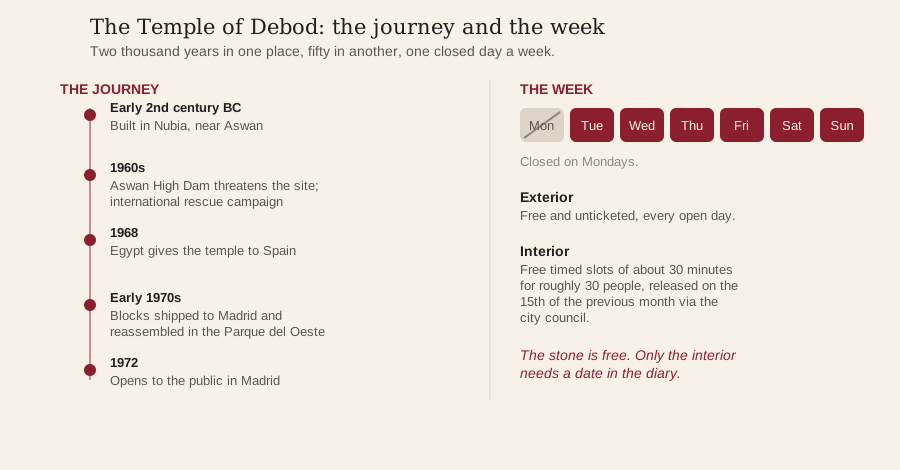
Because Spain helped save it. Debod was built in southern Egypt in the early second century BC, near Aswan in what was then Nubia. When the Aswan High Dam threatened to drown a stretch of monuments in the 1960s, Egypt gave the temple to Spain in thanks for its part in the international rescue campaign, and it was rebuilt here.
The rescue is the part worth understanding, because it explains why a Nubian temple ended up on a hill above a Madrid park rather than in a museum hall. Several countries dismantled and moved monuments from the flood zone, and several of those monuments were then given away. Debod crossed the Mediterranean in pieces, was reassembled in the Parque del Oeste on ground once occupied by a barracks, and opened to the public in 1972.
| When | What happened | Where |
|---|---|---|
| Early 2nd century BC | The temple is built and dedicated in Nubia, later extended under Ptolemaic and Roman rule | Near Aswan, southern Egypt |
| 1960s | The Aswan High Dam threatens the monuments of Lower Nubia, triggering an international rescue campaign | Egypt and Sudan |
| 1968 | Egypt gives the temple to Spain in recognition of its help with the campaign | Cairo and Madrid |
| Early 1970s | The blocks are shipped, catalogued and reassembled facing east to west on their new site | Parque del Oeste, Madrid |
| 1972 | The rebuilt temple opens to the public | Madrid |
What you walk through today is the original stone, not a copy: two free-standing gateways and then the temple itself, with reliefs inside that have been worn by two thousand years and one sea crossing. The orientation was changed in the move, which purists note and everybody else enjoys, because it is why the west front now takes the sunset full on.
Madrid put it somewhere generous. The site is public park, open at all hours, with no fence between you and the stone, and the city has never charged for it.
Can you go inside the Temple of Debod, and how do you book?
Yes, and it is free, but it needs a timed reservation. The city council releases slots on the 15th of the month before your visit, in half-hour blocks capped at roughly thirty people. The exterior needs no booking whatsoever. The whole site closes on Mondays, which is the single detail that ruins most planned visits.
The reservation system exists because the interior is small and the stone is fragile. Thirty people in half an hour is not a queue-management tactic, it is roughly what the chambers hold without damage. Slots are gone within days of release for weekends and holiday weeks, and the release date is fixed rather than rolling, so a trip planned three months out still means waiting until the 15th of the preceding month.
| Detail | What applies |
|---|---|
| Cost | Free, inside and out |
| Interior access | Timed reservation required, booked through the city council's site |
| Slot length | About 30 minutes |
| Capacity | Roughly 30 people per slot |
| When slots open | The 15th of the previous month |
| Exterior and grounds | No reservation, no ticket, open park |
| Closed | Mondays |
| Best fallback | The exterior and the pools, which is what most visitors come for anyway |
Set a reminder for the 15th. That is the whole trick. Spain's capital gives away a free ticket to a two-thousand-year-old interior and the main barrier is remembering a date, so the city council's own service is where the slots appear, and they appear all at once.
If you miss out, the loss is smaller than it sounds. The interior is two modest chambers with worn reliefs and a scale model, interesting for twenty minutes. The temple's effect on people is almost entirely an outdoor effect: the gateways, the pools, the light. Madrid's official tourism service keeps the current hours and closures on its Temple of Debod page, worth a look the week you travel because summer and winter hours differ.
When is the best time to visit, and how long do you need?
Late afternoon into sunset, if you want the view, and mid-morning if you want the stone to yourself. Allow 30 to 45 minutes for the site, an hour if you include the terrace and the walk down through the park. Avoid Monday entirely, and treat weekend evenings as the busiest slot of the week.
The temple faces the open ground of the Casa de Campo, which is why it became the city's default sunset spot rather than a place people visit for Egyptology. The crowd builds through the hour before the sun goes, thins fast afterwards, and behaves itself: this is a picnic crowd, not a party one.
| When | What it is like | How busy | Worth knowing |
|---|---|---|---|
| Opening, mid-morning | Cool light, clean lines, few people | Quiet | The best hour for photographs of the gateways alone |
| Midday, summer | Exposed and hot, no shade on the platform | Moderate | Interior slots are the comfortable option in July and August |
| Early afternoon | Steady trickle, easy access to the pools | Moderate | Combine with the Royal Palace before the walk up |
| The hour before sunset | The reason most people come, west-facing and open | Busy, especially at weekends | Arrive 40 minutes early for a spot on the grass |
| After dark | The temple is lit and the crowd has gone | Quiet | The park below is unlit in places; stick to the main paths |
| Monday | Closed | n/a | Plan the palace or a Paseo del Arte museum instead |
Half an hour covers the site honestly. What stretches it is the terrace: the paved viewpoint behind the temple looks west over the whole park, and people stay there far longer than they intended. In winter the sun sets early enough to fold this into a normal afternoon; in June you are waiting until well after dinner time by northern European standards.
What does it cost, and what is free around it?
Nothing, in both directions. Debod is free, its interior is free with a reservation, and the Parque del Oeste, the Sabatini Gardens and the Royal Palace forecourt cost nothing either. The paid attractions in this corner of Madrid start next door at the palace and the royal collections museum.
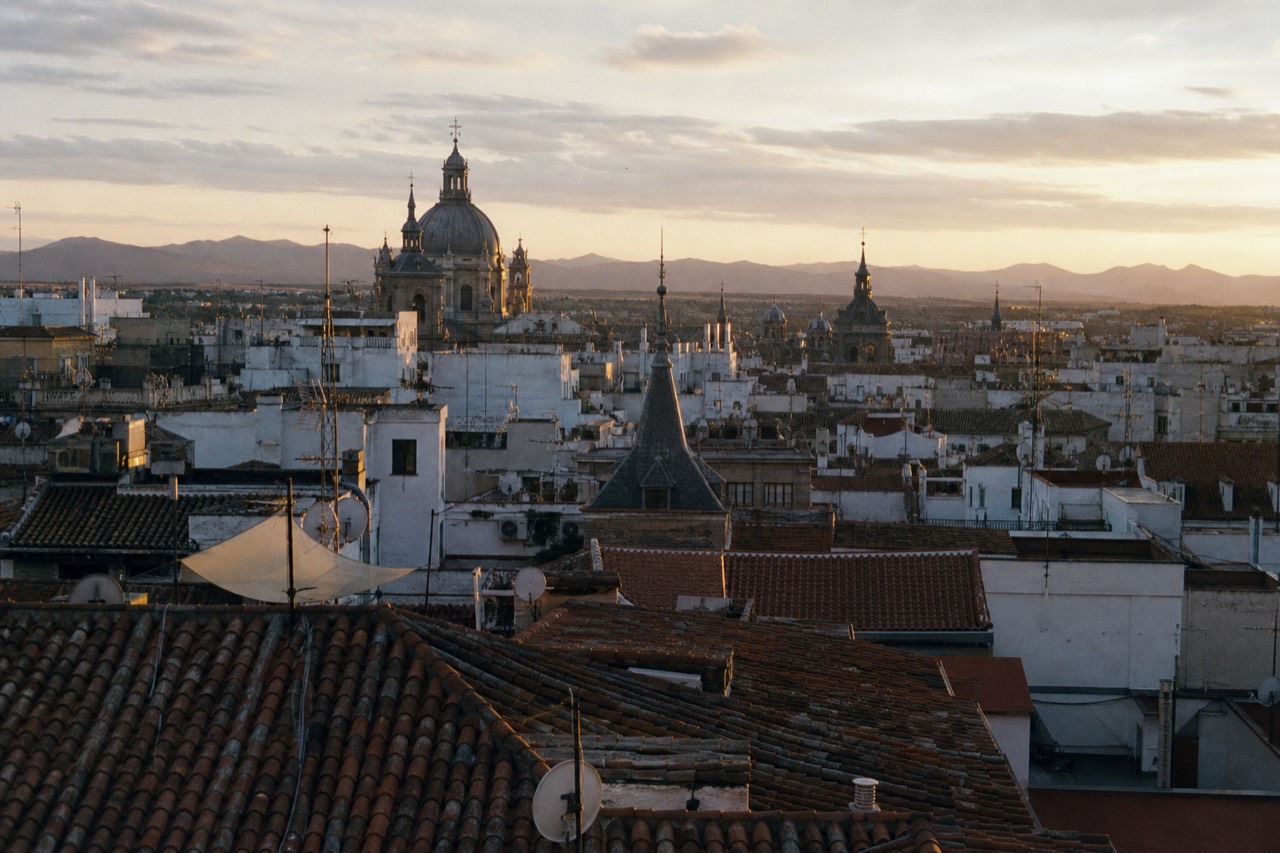
This is one of the few parts of central Madrid where a full afternoon can cost nothing without feeling like a compromise. The paid options nearby are strong, though, and they are the reason most people come up this way in the first place.
| Place | Ticket | Closed | Walk from Debod |
|---|---|---|---|
| Templo de Debod | Free, interior by free reservation | Mondays | On site |
| Parque del Oeste and the terrace | Free | Open | Immediately below |
| Sabatini Gardens | Free | Open | About 10 minutes |
| Royal Palace forecourt and guard change | Free | Ceremony on Wednesdays and Saturdays | About 15 minutes |
| Royal Palace state rooms | From $26 on the live listing | Open daily, state ceremonies aside | About 15 minutes |
| Galería de las Colecciones Reales | €14 official, $21 on the listing | 1 and 6 Jan, 1 May, 25 Dec | About 15 minutes |
| Museo Cerralbo | €3 | Mondays | About 10 minutes |
The royal collections next door is the one we would push hardest on a first trip. It opened in 2023, took 741,589 visitors in 2025 and passed two million in three years, and it shows Velázquez, Goya and Caravaggio from the royal holdings in a building that steps down the hillside below the palace. Entry runs on capacity-capped time slots, it is rated 4.7 across 223 reviews, and it is consistently quieter than the palace. There is a free window there too, 18:00 to 20:00 Monday to Thursday, though it applies to EU and Iberoamerican citizens only, and the national heritage service publishes the current hours for both buildings.
What should you pair with Debod on the same walk?
The Royal Palace, fifteen minutes south, is the natural pairing: the two sit at opposite ends of the same walk, one free and one ticketed. Add the Sabatini Gardens between them, and the Museo Cerralbo for three euros if the weather turns. That makes a half day with one paid ticket in it.
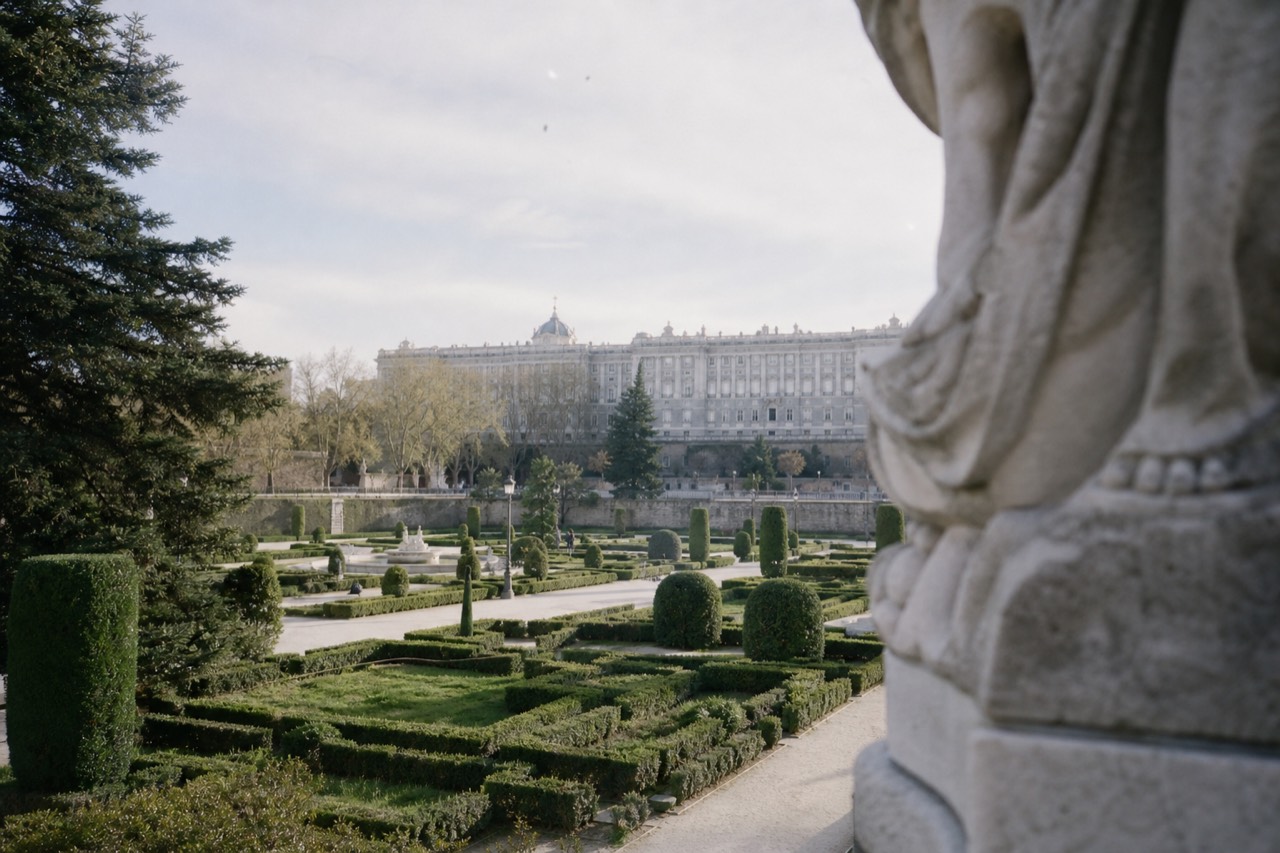
Run it in this order and the day builds rather than fizzles. The palace interior wants energy and an early slot; Debod wants low light and no hurry. Doing them the other way round means queueing for the palace in the afternoon and reaching the temple after the good hour has gone.
| Time | Stop | What you do | Note |
|---|---|---|---|
| 10:00 | Royal Palace | State rooms, armoury, roughly two hours | Book the first slot; Wednesday and Saturday queue from 11:00 |
| 12:15 | Plaza de la Armería | Guard change if it is a Wednesday or Saturday | Free, no ticket, relief every 30 minutes until 14:00 |
| 12:45 | Lunch near Ópera | An hour, sitting down | The last easy food before the park |
| 14:00 | Galería de las Colecciones Reales | Royal collections on a timed slot, 90 minutes | Last admission 45 minutes before closing |
| 16:00 | Sabatini Gardens | Twenty minutes through the terraces | Free, and shaded in summer |
| 16:30 | Museo Cerralbo | An aristocratic mansion left as it was | €3, closed Mondays |
| 18:00 | Templo de Debod | The temple, the pools, the terrace | Arrive early if sunset is the plan |
The palace is the separate paid interior in this sequence. Allow enough time for the Royal Palace before walking on to Debod. Our palace guide covers the rooms, free windows and ceremony calendar.
If the weather is against you, invert the day: two indoor tickets in the morning and afternoon, then judge the sunset walk on the forecast. Debod holds up in rain, oddly, because the pools take the drips and the crowd disappears. What it does not hold up in is wind, which on that exposed platform is genuinely unpleasant.
How does Debod compare with Madrid's other free sights?
It is the only free sight in Madrid that is also an ancient monument, but it is far from the only free one. Four city museums never charge at all, the big three galleries all open free for set hours, and the state museums run free afternoons. Debod's edge is that it never closes its grounds and never asks for anything.
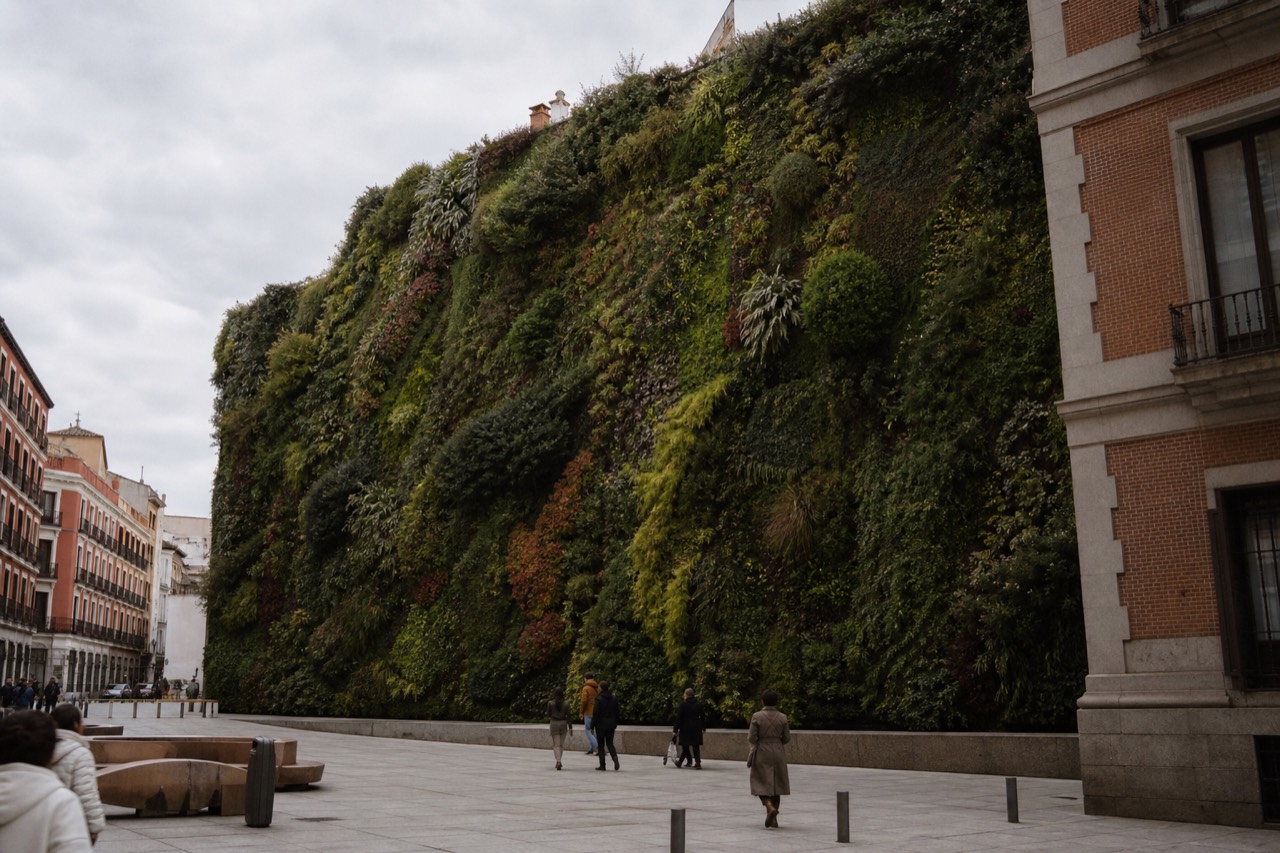
Madrid gives away more than most European capitals, and the giveaway is spread across the week rather than lumped into one day. The city-run venues below charge nothing at any hour, which is a different proposition from a free window you have to queue for.
| Venue | What it is | Cost | Watch out |
|---|---|---|---|
| Templo de Debod | An ancient Egyptian temple in a park | Free; interior by reservation | Closed Mondays |
| Museo de San Isidro | Madrid's origins, archaeology and the patron-saint legend | Free | City-run hours, check before a Monday |
| Museo de Historia de Madrid | The city from town to capital, on Calle Fuencarral | Free | Worth an hour, not three |
| Museo ABC | Drawing and illustration, in a converted early-1900s building | Free | Exhibition-led, so the content rotates |
| Matadero Madrid | A former slaughterhouse turned culture complex by the river | Free to wander | Some individual shows are ticketed |
| Casa Museo Lope de Vega | The playwright's house in the Barrio de las Letras | Free | Small guided groups only, reserve ahead |
| Museo Naval | Spain's naval history on the Paseo del Prado | Free, €3 suggested donation | Closed all August 2026, back in September |
| Real Jardín Botánico | The royal botanical garden beside the Prado | $9 on the listing, free Tuesday mornings | Not free at other hours |
The big galleries play a different game. The Prado's ticket page carries the paid slots, but its permanent collection also opens free for the last two hours of every single day, 18:00 to 20:00 from Monday to Saturday and 17:00 to 19:00 on Sundays and holidays. The Reina Sofía is free most evenings from 19:00 to 21:00 and on Sunday middays, and the Thyssen gives away its permanent collection every Monday from noon. Anyone building a cheap week here should read those windows alongside the always-free list, which is exactly what our guide to which museums are free and when sets out. The wider madrid museums directory carries the same figures museum by museum.
Is the Temple of Debod worth going out of your way for?
For most visitors, yes, but as part of a walk rather than as a destination. Twenty minutes of stone and half an hour of view is a fair description. Book the interior if the date works, come for the last of the light if it does not, and do not travel across the city on a Monday.
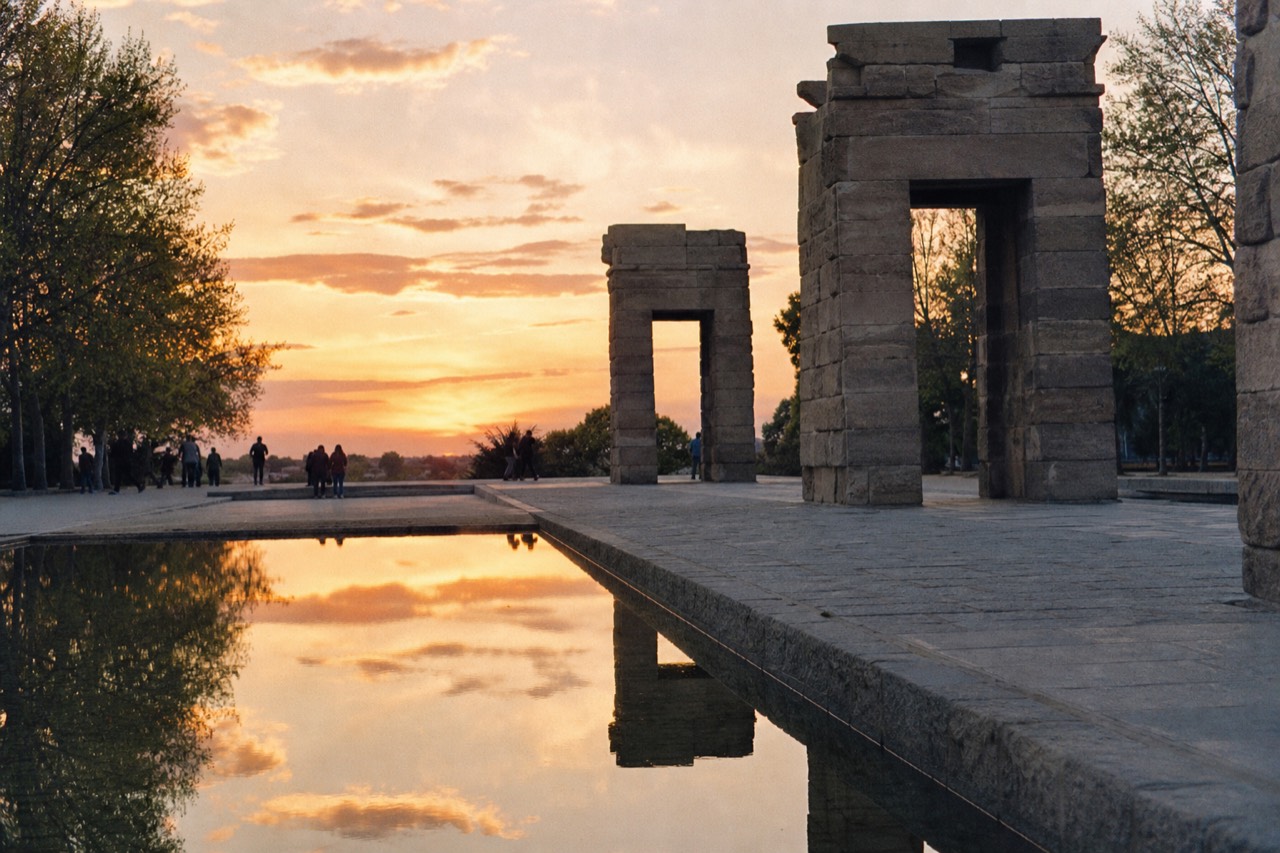
The honest case against it is that the temple is small and the reliefs are worn, so anyone arriving with Karnak in mind will be underwhelmed within ten minutes. The case for it is everything around the stone: the elevation, the pools, the free access, and the fact that a Nubian temple sitting above a European capital is a strange thing that never quite stops being strange.
| If you are | Verdict | Why |
|---|---|---|
| On a first trip with two days | Go at sunset | It costs nothing and sits between the palace and Plaza de España |
| Travelling with children | Go, keep it short | Open ground to run on, no ticket, no silence rules |
| An Egyptology enthusiast | Book the interior | The chambers are the only part that rewards close looking |
| Chasing photographs | Go twice | Early morning for the stone, evening for the sky |
| Visiting on a Monday | Skip it | The site closes; the ranked museum list has better Monday options |
| Short on time and paying for one thing | Choose the palace | Debod is a bonus on the way, not a substitute for a ticket |
What else do visitors ask about the Temple of Debod?
The recurring four: yes you can go inside, but only with a free reservation released on the 15th of the previous month; the site closes on Mondays; sunset is the busy hour and worth arriving early for; and nothing here costs money, so the budget question is really about what you pair it with.
Can you go inside the Temple of Debod?
Yes. Interior access is free but capacity-controlled: half-hour slots for around thirty people, booked in advance through the city council's reservation service. Slots for a given month are released on the 15th of the month before, and weekend slots go quickly. The exterior, the gateways and the pools need no booking at all.
Is the Temple of Debod worth visiting?
For the setting, yes. The temple itself takes twenty minutes; the elevated terrace behind it, looking west over the Casa de Campo, is where people stay. It costs nothing, it sits on the walk between Plaza de España and the Royal Palace, and it is genuinely ancient rather than a replica. Arrive with modest expectations of the stone and generous ones of the view.
What day is the Temple of Debod closed?
Mondays. That puts it in line with most of Madrid's museums, and out of line with the Reina Sofía, which closes on Tuesdays. If your only free evening is a Monday, walk the Sabatini Gardens and the Parque del Oeste instead, both of which stay open, or take the Thyssen's free Monday afternoon window.
How much does the Temple of Debod cost?
Nothing. Entry to the site is free, and the interior visit is free as well, though it requires the timed reservation. There is no ticket office and no donation box. The nearest paid attractions are the Royal Palace, from around $26 on the live listing, and the Galería de las Colecciones Reales at €14 officially.
How long should you spend at the Temple of Debod?
Half an hour covers the temple, the gateways and a circuit of the pools. Allow an hour if you are staying for sunset, and add another thirty minutes if you have an interior slot booked. Walking down through the Parque del Oeste afterwards takes about fifteen minutes and lands you near Príncipe Pío.
What is the best time of day for photographs?
Two windows work. Early morning gives clean light on the east face with almost nobody in frame. The hour before sunset gives the west front, the reflections in the pools and a sky that does most of the work, at the cost of sharing the grass with a few hundred people. Nights are quiet and the temple is lit.
What is near the Temple of Debod?
Plaza de España is a five-minute walk east, the Museo Cerralbo about ten minutes, and the Royal Palace with the Galería de las Colecciones Reales roughly fifteen minutes south through the Sabatini Gardens. Príncipe Pío station sits at the bottom of the park. It is one of the densest corners of central Madrid for things to do on foot.
Do you need a reservation for the exterior?
No. The grounds are public park and open at all hours, including after dark when the temple is floodlit. Only the interior chambers are controlled, and only during opening hours. That is why the fallback plan when reservations are gone is simply to turn up.
Related reading
Medieval Madrid Walk To Debod
Choose your old-Madrid walking date before arranging the rest of the day. Allow about 2½ hours; Debod interior admission is not included.
About 2½ hours · English option · Plaza Mayor, Casa de la Carnicería; yellow umbrella
Scheduled departure dates. Availability and final price are confirmed on Viator.
None of these experiences matches that choice. Adjust your preference or reset to the general recommendation.
Compare Options And Plan Your Visit
- Old Madrid walk to Debod
- About 2½ hours with an English guide; outdoor monuments only.
- Palace interior on the same day
- A separate Royal Palace admission, not Debod interior access.
- Royal art beside the palace
- Independent Royal Collections Gallery admission for a separate indoor stop.
Before Booking
Fully outdoors: no monument interior tickets. Guide gratuity, food and drinks are extra.
Compare complete party totals in the same currency, including admission, guidance, transport and any extras. These are your comparison inputs, not live ticket prices.