Opens the official listing with live dates and prices. Book there; nothing is charged on this site.
Area
Madrid
Theme
Quirky & immersive
The vortex tunnel is where the shrieking starts. You cross a flat, solid bridge inside a spinning painted cylinder, and within two steps your legs stop believing the floor. Everything else here works the same way: a room where a child towers over an adult, mirrors that repeat you into the dark, holograms that hang in mid-air, patterned walls that argue with your eyes. The Museum of Illusions sits on Calle Doctor Cortezo, in the old streets between Sol and Tirso de Molina, and it is one of the few places in central Madrid where children set the pace.
What will you see inside the Museum of Illusions?
The exhibits are built tricks rather than objects: the Ames Room, where people appear to change size as they cross it, a rotating vortex tunnel, an infinity room of mirrors, an anti-gravity room, a kaleidoscope, holograms, a symmetry room and moiré patterns. A games area of physical brain-teasers closes the route.
The Ames Room is the one families remember, because it needs two people to work. One person stands in the far corner and shrinks, the other steps across and swells to giant size, and the room does all of it with a sloped floor and a false perspective your brain refuses to correct. Photographs come out looking impossible, which is exactly why there is usually a small queue for it.
The vortex tunnel is the physical one. Nothing under your feet moves, but the painted drum turning around you overrides the inner ear and hands lock onto the rail. Some visitors walk it three times, others take one look and go around. The anti-gravity and inverted rooms play a slower version of the same joke, tipping a whole set sideways so that a photograph taken at the right angle shows you standing on a ceiling.
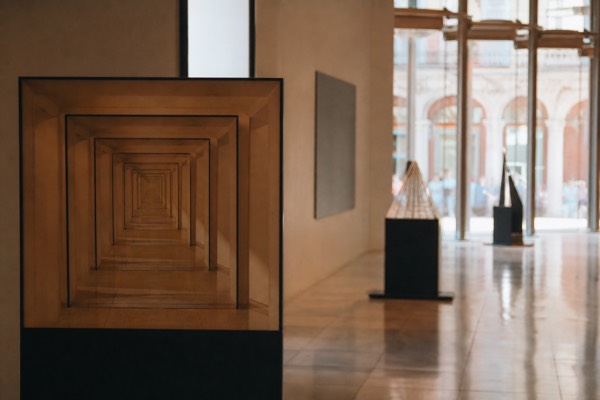
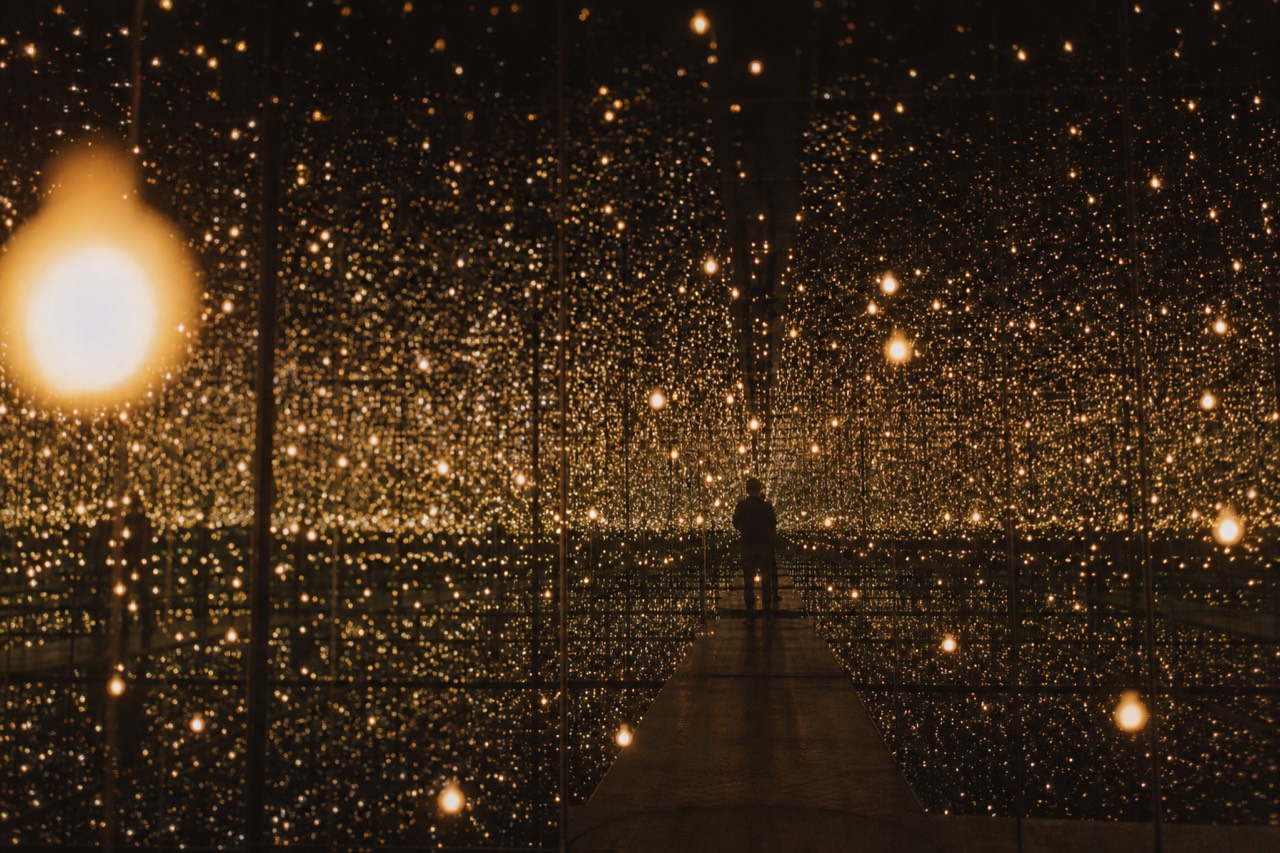
Then come the quieter tricks. Holograms sit in dark cases and refuse to resolve into flat images. The infinity room repeats a single light source into what looks like deep space. The kaleidoscope, the symmetry room and the moiré walls are the closest the venue comes to teaching optics rather than staging photographs. The games area at the end is deliberately unglamorous and is where children who like puzzles lose half an hour.
Exhibit
What it does
Worth knowing
Ames Room
Distorted perspective makes people shrink or grow
Needs two visitors, one at each end
Vortex tunnel
A spinning drum around a solid bridge
Hold the rail; some skip it entirely
Anti-gravity room
A tilted set that reads as a ceiling in photos
Best with someone else taking the shot
Infinity room
Mirrors repeating one light into the dark
Dim, so steady the camera
Holograms and moiré walls
Optical effects with no photo trick involved
The most genuinely instructive corner
Games area
Physical brain-teasers and puzzles
Where the extra half hour goes
How do Museum of Illusions tickets work, and which one should you pick?
One ticket covers the whole venue and entry runs on timed slots. Adult admission starts around €15, children aged four to twelve from about €11, reduced tickets from roughly €12, and a family option lands near €48. Prices move a little by day and by where you buy, so the live figure sits on the listing.
The only arithmetic worth doing is the family one. Two adults and two children bought as singles come to more than the family bundle, so check the bundle first if you are a group of four. Everyone else is choosing a date and a time, not a ticket type. Slots at midday on a wet Saturday are the ones that go, and the rooms are small enough that a full slot changes the visit. If your dates are settled, it is worth taking a moment to check availability using the booking panel above.
Reduced admission applies to the categories the venue lists rather than to any student card you happen to carry, and the current conditions sit on the museum's own site along with the day's opening times. Nothing here has a free window: this is a private attraction, not one of the state museums with a free evening, so the price is the price.
Ticket
Price
Notes
Adult, 13 to 64
From about €15
Covers every exhibit and the games area
Child, 4 to 12
From about €11
The age band the venue prices on
Reduced
From about €12
Set categories, listed on the official site
Family option
Around €48
Cheaper than four singles for a group of four
Timed entry booked online
Live price on the listing
Names your arrival time, not your afternoon
How long does a visit really take?
Between forty-five minutes and an hour and a quarter. Adults walking it briskly are back on the street inside forty-five minutes. Families who let children repeat the vortex tunnel, set up the Ames Room shot twice and finish the puzzle table use closer to ninety. It is a short, dense venue rather than an afternoon out.
This is the honest expectation to set before you buy, because it is the one thing visitors argue about. Judged as an hour of entertainment, it lands well and children rarely want to leave. Judged as a museum ticket against the state museums down the road, an hour can feel thin. Both readings are fair, and knowing which one you hold before you go decides whether you enjoy it.
Two things stretch the visit usefully. The games area rewards anyone who sits down at it rather than glancing past, and the photo rooms work far better when someone in the group takes the picture properly instead of everyone shooting at once. In a busy slot, expect a short wait at the Ames Room and the anti-gravity set, which is queue time rather than visit time. Going early in the day or late in the evening removes most of it.
Is it good for kids, and what ages does it suit?
Yes, with a sweet spot. Children from about five to twelve get the most from it: old enough to work out the trick, young enough to be delighted anyway. Teenagers treat it as a photo stop and are done quickly. Toddlers can be carried through but miss the point, and the spinning tunnel unsettles a fair number of them.
Several rooms only pay off with two people of different heights, so it is a place where adults end up participating rather than supervising. Someone has to stand in the far corner of the Ames Room, and someone has to hold the camera. Parents who expect to sit down for an hour will not get one, which is either the appeal or the drawback depending on the day you are having.
For a rainy afternoon with school-age children in the centre of Madrid, it is one of the strongest options available: indoors, short, central, and it does not demand quiet. Motion-sensitive visitors of any age should simply walk around the vortex tunnel, which is signposted and easy to bypass. Nothing else in the building disorients anyone.
Know before you go: hours, address and getting there
The museum is at Calle Doctor Cortezo 8, a few minutes on foot from Sol and Tirso de Molina in the old centre. It runs long days, roughly 10:00 to 21:00 or 22:00 depending on the day and season, and entry is by timed slot, so the ticket you hold names your arrival rather than your whole afternoon.
The location does a lot of work. You are in the streets south of Sol, which means every walking route through the centre passes within a couple of blocks, and lunch, Plaza Mayor and the Rastro district are all close. Nothing about the visit needs planning beyond the slot: there is no cloakroom drama, no route to study and no reason to arrive early.
Photography is expected rather than tolerated, since half the exhibits exist to be photographed. Bring a phone with charge in it. Check the day's hours when you book, because closing time shifts between the quiet season and summer, and the last slot of the evening is sold on the assumption that an hour is enough.
At a glance
Detail
Address
Calle Doctor Cortezo 8, central Madrid
Nearby
Walkable from Sol and Tirso de Molina
Opening hours
Roughly 10:00 to 21:00 or 22:00, varying by day and season
Typical visit
45 minutes to 1 hour 15
Best ages
Roughly 5 to 12, and anyone who likes a puzzle
Entry
Timed slots booked online
What can you pair with the Museum of Illusions nearby?
The Museum of Senses is the closest match in spirit and a short walk north, and the two together fill a wet afternoon for a family. IKONO adds a third stop down by the Reina Sofía. For contrast rather than more of the same, the Prado is fifteen minutes east and works better as the morning half of the day.
The natural circuit is light plus heavy rather than three hours of optical tricks. Put the Prado first while everyone still has patience for paintings, then walk back into the centre for something noisier. If the day is entirely for the children, the Museum of Senses runs a similar hands-on format with a different emphasis, and IKONO turns the same idea into photographable rooms.
Older children who want figures rather than tricks are better served at the wax museum up by Plaza de Colón, which is a longer walk but a genuinely different afternoon. The city's own tourism service keeps current listings for all of these on esmadrid.com, which is worth a glance when you are fixing the order of a family day.
Questions people ask
How much are Museum of Illusions Madrid tickets?
Adult admission starts at around €15, children aged four to twelve from about €11, and reduced tickets from roughly €12. A family option comes in near €48 and beats four singles for a group of four. Figures shift slightly by day and by where you buy, so the live price sits on the listing.
How long does the Museum of Illusions take?
Most visits run between forty-five minutes and an hour and a quarter. Adults moving briskly finish in three quarters of an hour; families who repeat the vortex tunnel and settle into the puzzle area use closer to ninety minutes. It is short by design, which is why it pairs so easily with something bigger the same day.
What age is the Museum of Illusions best for?
Roughly five to twelve is the sweet spot, old enough to understand the trick and young enough to enjoy it without irony. Teenagers use it as a photo stop, and adults without children generally enjoy the optics section more than the photo rooms. Toddlers can be carried through but get little from it.
Do you need to book Museum of Illusions tickets in advance?
Entry runs on timed slots, so booking ahead is the practical move, particularly on wet weekends and during school holidays when the middle of the day fills. The rooms are small and a full slot changes the experience, so an early or late slot is usually the better visit as well as the easier booking.
Where is the Museum of Illusions in Madrid?
It is at Calle Doctor Cortezo 8, in the old streets south of Sol and a few minutes from Tirso de Molina. Almost any walking route through the centre passes nearby, and Plaza Mayor is close enough to build a single afternoon around both.
Can you take photos at the Museum of Illusions?
Yes, and several exhibits only make sense as photographs. The Ames Room, the anti-gravity set and the infinity room are all built for a camera, and staff are used to visitors setting up shots. Bring a charged phone and someone willing to be the photographer, since most of the tricks need two people.
Is the Museum of Illusions worth it?
As an hour of entertainment for families, yes, and children rarely want to leave. Measured against the state art museums a short walk away it can feel brief and expensive, which is the split you see in visitor feedback. Decide which of those two comparisons you are making, and the answer follows.
Is it suitable for adults visiting without children?
It works, though it is a different visit. Adults tend to spend longer on the holograms, the moiré walls and the symmetry room, where the optics are genuinely interesting, and less time staging photographs. Expect around forty-five minutes, and expect the room to be full of families.
Madrid · Madrid's classic wax museum near Plaza de Colon
Madrid's long-running wax museum by Plaza de Colon, filling its halls with Spanish royals, footballers and film characters in wax. Door prices run slightly higher on Saturdays and holidays.
Madrid · Walk-through sensory sets built for your camera
An immersive experience space in the centre of Madrid, a chain of walk-through sets designed to be touched, crossed and photographed. Short and playful, it pairs well with a heavier art stop the same day.