Where Is Guernica? Seeing Picasso's Painting at the Reina Sofia
One canvas, three and a half by nearly eight metres, in a room of its own on the second floor of the Sabatini building. Here is how to find it, when it is free, and why its photography rules changed in 2023.
 By Elena García, Madrid Museums Specialist & Cultural Guide
Short answer
Guernica hangs in Room 205.10 on Floor 2 of the Sabatini building at the Museo Reina Sofía in Madrid, ten minutes' walk south of the Prado. Entry starts from $14 on the listing, and the museum is free most evenings from 19:00. It closes on Tuesdays, not Mondays, which is the single most common wasted journey in the city.
Booking choice: Explore Reina Sofía small-group guided visit
The room is quieter than the ones around it. People come up the stairs talking, turn the corner, and stop about four metres short of the canvas without anyone telling them to. Guernica is three and a half metres tall and nearly eight metres wide, painted in greys and blacks and a hard white, and the scale is the first thing that registers. Photographs flatten it. Standing in front of it, the horse's head is above your own.
This is the painting most people come to Madrid to see, and it is also the one they most often go looking for in the wrong museum. It is not at the Prado. It hangs in the Reina Sofía, in Room 205.10 of the Sabatini building, and the photography rules changed in 2023. Below: where the room is, what happened in the town the painting is named after, how the canvas reached Madrid, and when you can see it for nothing. The rest of the city's collections sit in the madrid museums directory.
Where is Guernica now, and how do you find the room?
Guernica is in the Museo Reina Sofía in Madrid, Room 205.10 on Floor 2 of the Sabatini building. The museum stands at the southern end of the Paseo del Arte, next to Atocha station, about ten minutes' walk from the Prado. Follow the signs from either entrance; the painting has its own room and the route is marked.
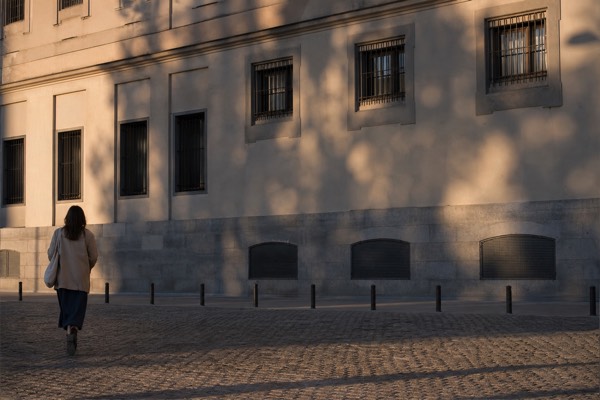
The museum has two entrances and they behave differently. The Sabatini building on Calle Santa Isabel is the original eighteenth-century hospital, and it is where the ticket queue forms. The Nouvel building on Ronda de Atocha is the modern extension, and the museum's own advice is to use it if you have already bought online. Both lead to the same floors, but one saves you the line.
| What you need | Detail |
|---|---|
| Museum | Museo Nacional Centro de Arte Reina Sofía, Madrid |
| Room | 205.10, Floor 2, Sabatini building |
| Best entrance | Nouvel building, Ronda de Atocha, if you booked online |
| Nearest station | Atocha, at the southern end of the Paseo del Arte |
| Closed | Tuesdays, plus 1 and 6 January, 1 May, 24, 25 and 31 December |
| Ticket | from $14 on the listing, €12 official, free most evenings from 19:00 |
The room number is worth writing down. Some visitor guides quote an adjacent number and the floor plan is not always intuitive on a first visit, so the museum's own page for Room 205.10 is the reference to trust. Once you are on Floor 2 the flow of people does most of the work anyway.
If Guernica is the reason for your visit, make Reina Sofía the anchor of the day and plan around its Tuesday closure.
Can you photograph Guernica?
Yes, and it has been allowed since September 2023. Under director Manuel Segade the Reina Sofía lifted the long-standing ban on photographing Guernica that month, and photographs without flash have been permitted in front of it ever since. The museum's general rule already allowed no-flash photography across its sites, and Guernica was the famous exception. Flash, tripods and selfie sticks stay banned everywhere.
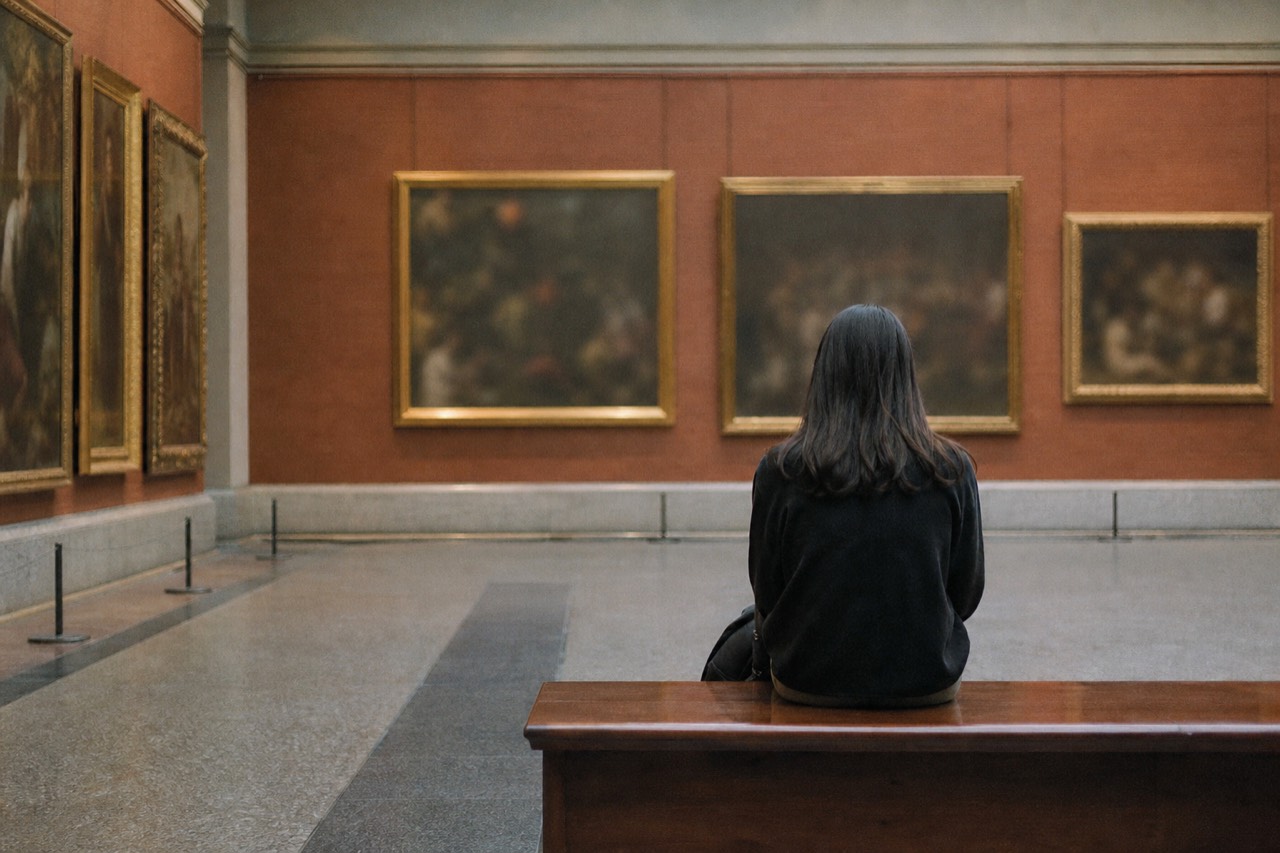
The old ban is one of the most repeated pieces of Madrid travel advice, which is exactly why it needs correcting. For decades guards spent much of their day stopping people raising a phone in that room, and the reasons given ranged from conservation to copyright to crowd control. The change came in September 2023 and was framed by the museum as a way of normalising the visit rather than policing it, freeing staff to watch the room instead of the phones.
| Rule | Status | Applies to |
|---|---|---|
| Photographs without flash | Permitted since September 2023 | Guernica and the rest of the collection |
| Flash photography | Not permitted | Every site of the museum |
| Tripods, selfie sticks, camera stands | Not permitted | Every site of the museum |
| Filming for commercial use | Prior authorisation required | Press department |
| Bags larger than 40 x 30 x 10 cm | Refused at the door | Use the lockers, no suitcases at all |
Two practical notes that catch people out more often than the camera rule. The galleries are held at a constant 21ºC for conservation, so in a Madrid July you walk in from the heat and want a layer within twenty minutes. And visitors are asked to leave the rooms fifteen minutes before closing, so a 20:45 arrival on a free evening is not the visit you think it is.
The blanket ban lasting so long also explains why so many pages still describe it as current. If you are reading anything written before late 2023, assume the photography line in it is out of date, and check the museum's visitor information for the current version.
What happened at Guernica in 1937, and what is in the painting?
On 26 April 1937, during the Spanish Civil War, German Condor Legion and Italian aircraft bombed the Basque town of Gernika. Picasso, then in Paris, answered with a canvas 3.49 by 7.77 metres, painted between 1 May and 4 June 1937. It shows a bull, a screaming horse, a mother with a dead child and a bare light bulb.
The bombing was carried out in the afternoon on a market day, and its scale relative to the size of the town is why it became a symbol rather than a statistic. Picasso had already been asked by the Spanish Republic to produce a work for its pavilion at the Paris International Exposition that year. He had not settled on a subject. The news from the Basque Country settled it for him, and he finished the canvas in barely five weeks.
| Element | Where it sits | How it is usually read |
|---|---|---|
| The bull | Upper left, above the mother | Spain itself, or brute force, depending on who you ask |
| The screaming horse | Centre, head thrown back | The civilian population, pierced and collapsing |
| Mother with a dead child | Left, beneath the bull | The single most direct image in the painting |
| The fallen fighter | Along the bottom, sword broken | Defeat, with a small flower growing from the hand |
| The bare light bulb | Top centre, inside an eye shape | Modern war seen under an interrogation lamp |
| The lamp-bearing figure | Right of centre, leaning in from a window | Witness, or the act of looking itself |
One detail has generated more speculation than any other: the so-called hidden skull, a shape some viewers read inside the body of the dying horse. It is a reading rather than a documented intention, and Picasso, who declined to explain the painting throughout his life, never confirmed it. The most repeated story about him and the canvas has a German officer in occupied Paris holding a photograph of it and asking whether he had done that. Picasso's reply, as it is always told, was that they had.
The museum runs a dedicated site for the painting, and its Guernica research pages carry the original contract papers, the bombing context and the canvas's condition history in more depth than any gallery label can.
How did the painting end up in Madrid?
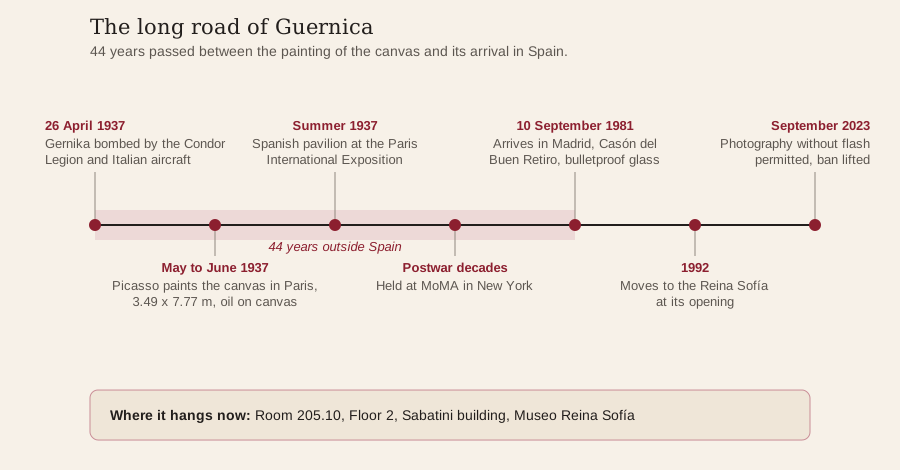
It took forty-four years. Guernica was shown at the 1937 Paris exposition, then spent decades at the Museum of Modern Art in New York while Franco ruled Spain. It arrived in Madrid on 10 September 1981 and went on show at the Casón del Buen Retiro behind bulletproof glass. In 1992 it moved to the Reina Sofía, where it has stayed.
The delay was political rather than logistical. Picasso's condition was that the painting go to Spain only when democratic liberties had been restored, so while the dictatorship lasted it stayed in New York, becoming the most famous Spanish painting that Spaniards could not see. Its arrival in 1981 was treated as a national event and handled like a state transfer, escorted and installed behind glass.
| Date | What happened |
|---|---|
| 26 April 1937 | Gernika is bombed by German and Italian aircraft during the Spanish Civil War |
| 1 May to 4 June 1937 | Picasso paints the canvas in Paris in about five weeks |
| Summer 1937 | Shown in the Spanish pavilion at the Paris International Exposition |
| Post-war decades | Held at the Museum of Modern Art in New York while Franco rules Spain |
| 10 September 1981 | Arrives in Madrid, displayed at the Casón del Buen Retiro under bulletproof glass |
| 1992 | Transferred to the Reina Sofía when it opens as the national museum of twentieth-century art |
| September 2023 | The photography ban in front of the painting is lifted, no flash |
The bulletproof glass is gone now, which is the detail visitors from the 1980s notice first. The painting hangs in the open, roped back rather than boxed in, with the room's own guards and the distance doing the work. It has never been sold and is not on the market: it belongs to the Spanish state, so the valuations that circulate online are estimates attached to something that will never carry a price.
Tuesday is the day this all falls apart. The Reina Sofía closes on Tuesdays, unlike almost every other museum in the city, which shuts on Mondays. If your one free day is a Tuesday, the Royal Palace and the Prado are both open, and the collector's mansion on Calle Serrano is a good quiet substitute for an art afternoon.
Can you see Guernica for free, and when is the museum open?
Yes. The Reina Sofía is free from 19:00 to 21:00 on Mondays and Wednesday to Saturday, and from 12:30 to 14:30 on Sundays. A ticket is still required and free entry is for individuals rather than groups. Paid entry runs €12 official, or from $14 on the listing. The museum is closed all day Tuesday.
Free entry here is popular enough to have changed the museum's audience: 62% of the people who came into the main site in 2025 entered on a free slot or a discount. That is a lot of people choosing the same two hours, so a free evening is not a quiet evening, and the room holding Guernica is where the density concentrates.
| Day | Opening hours | Free window |
|---|---|---|
| Monday | 10:00 to 21:00 | 19:00 to 21:00 |
| Tuesday | Closed | None |
| Wednesday to Saturday | 10:00 to 21:00 | 19:00 to 21:00 |
| Sunday | 10:00 to 14:30 | 12:30 to 14:30 |
| Free days | Full hours | 18 April, 18 and 22 May, 12 October, 6 December |
If you want the painting without the crowd, the quietest hour is the first one after opening, before the tour groups reach Floor 2, and the least quiet is the first twenty minutes of any free evening. The Sunday window is the shortest of the week and closes with the museum, so plan for about ninety usable minutes rather than two hours.
Free hours across the rest of the city follow their own logic, and the full grid, including the Prado's daily free window and the Thyssen's free Monday afternoons, is in our guide to free-entry hours across the city.
What else is worth your time inside the museum?
Guernica takes twenty minutes and the museum deserves two hours. The rooms around the painting carry the Spanish Civil War context, and the collection beyond them holds deep Dalí and Miró holdings plus almost 25,000 works in total, built up since 1894 with a strong Latin American strand alongside the Spanish core.
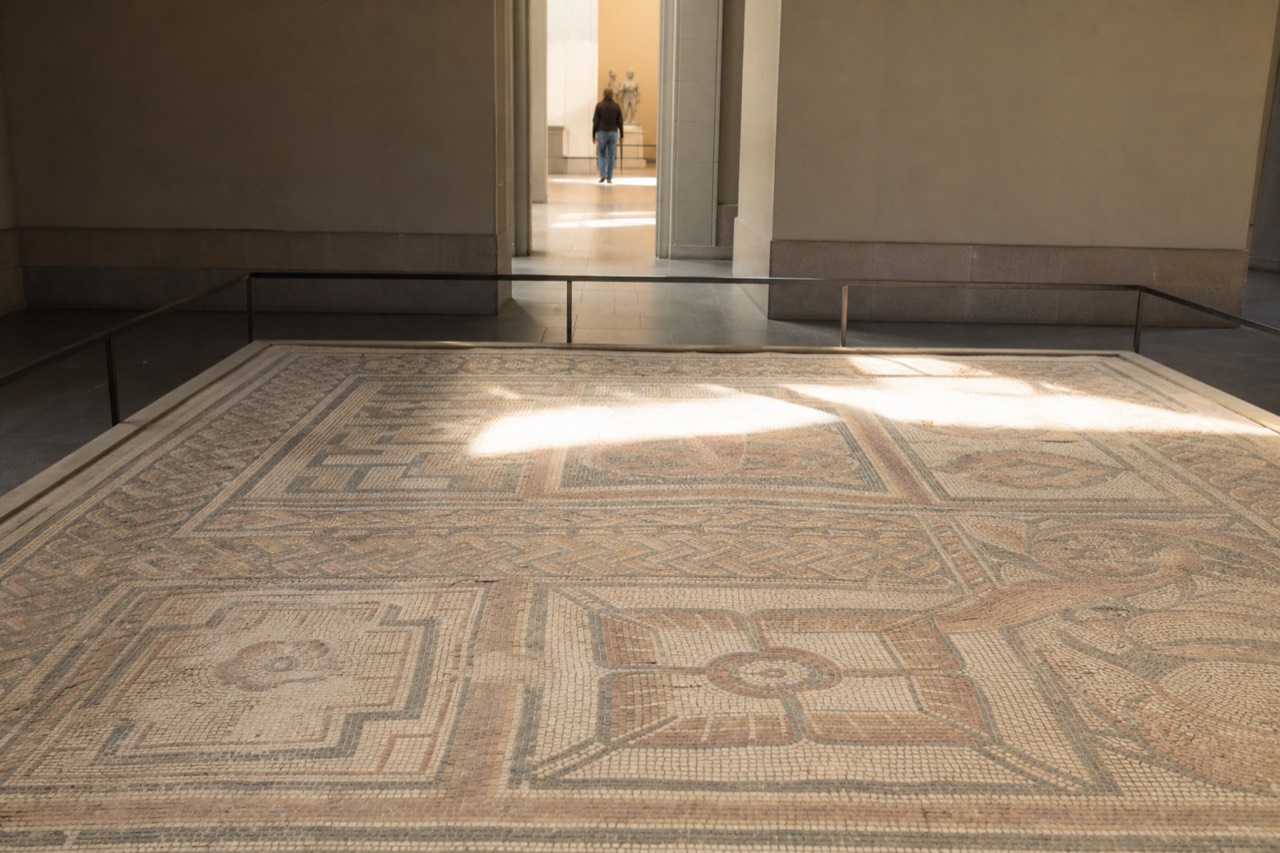
Most visitors walk in, find Guernica, photograph it now that they can, and leave. That is a shame, mostly because the rooms immediately around the painting are what turn it from an image into an argument: preparatory sketches, photographs of the work in progress, and the political context that produced it.
| Where | What is there | Time to allow |
|---|---|---|
| Room 205.10 and its neighbours | Guernica plus the Civil War rooms around it | 40 minutes |
| Floor 2, Sabatini | Early twentieth century, Dalí and Miró | 40 minutes |
| Floor 4 | The re-presented collection from 1975 to now | 30 minutes |
| Nouvel building | Temporary exhibitions and the café | Varies by show |
| Palacio de Velázquez, Retiro | Museum exhibitions in a free park pavilion | An hour, free |
The Retiro pavilions are the part almost nobody books for. The Palacio de Velázquez shows Reina Sofía exhibitions inside the park at no charge, which makes it the cheapest serious art hour in Madrid. Its neighbour, the Palacio de Cristal, is closed for works, so do not build an afternoon around it.
If the modern rooms leave you wanting older Spanish painting in a smaller setting, the collector's mansion on Calle Serrano is the obvious follow-up. It is a house rather than a gallery, it holds Goya among its highlights, and it opens on Tuesdays, which is precisely when the Reina Sofía does not.
For everything else the city holds, from the old masters at one end of the boulevard to the house museums off it, our map of Madrid's art collections sets out what is where and what each one costs.
How do you fit Guernica into a day in Madrid?
Give the Reina Sofía a two-hour block and pair it with one other collection, not two. The Prado in the morning and Guernica in a free evening is the standard combination and it works. On a Tuesday, when the museum closes, swap it for the Royal Palace or a house museum and come back the next day.
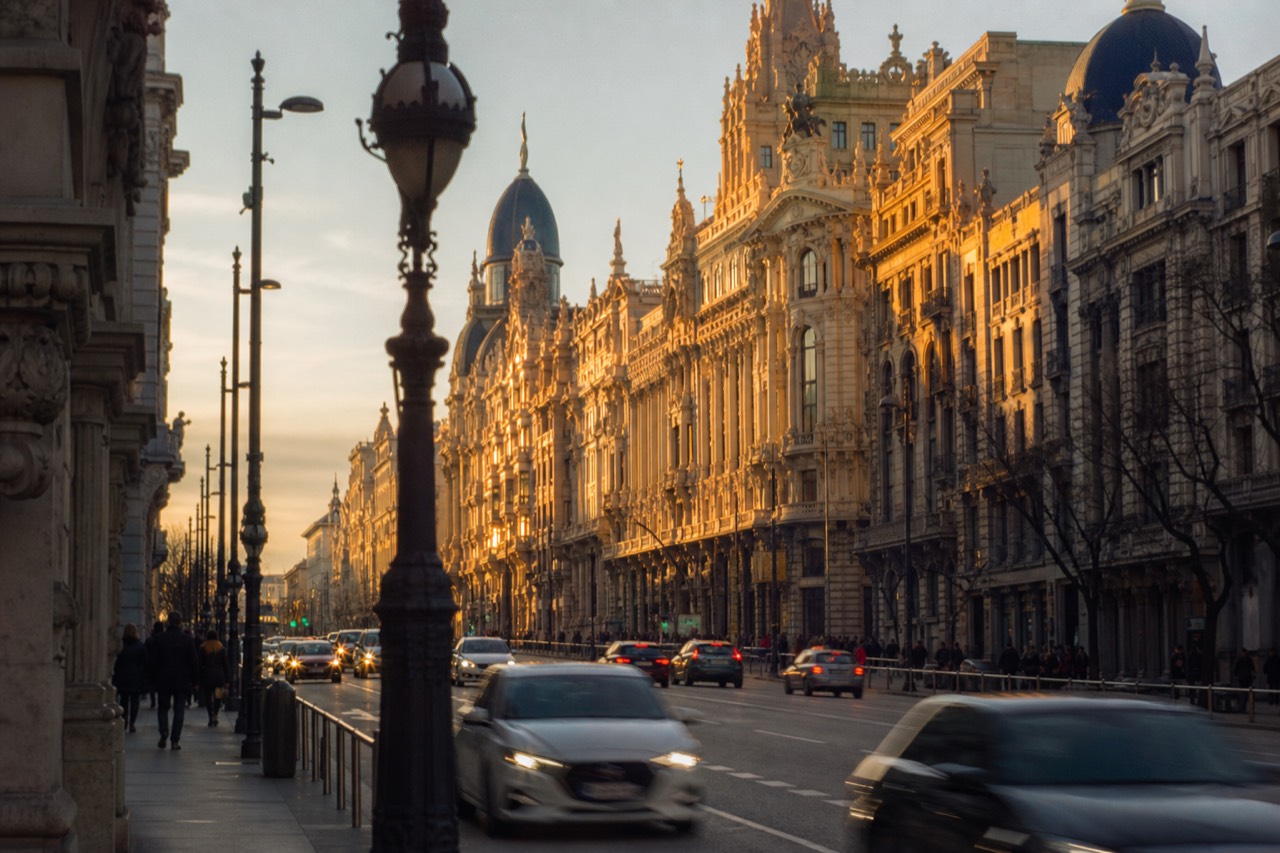
The three Paseo del Arte museums sit within a ten-minute walk of one another, which makes a three-museum day physically easy and mentally punishing. Two collections a day is the honest ceiling for most people, and the Reina Sofía is the better afternoon of the two because it asks for less sustained attention than the Prado does.
| Your day | Morning | Afternoon or evening | Note |
|---|---|---|---|
| Standard | Prado, booked entry | Reina Sofía free from 19:00 | The most common plan, and it works |
| Tuesday | Royal Palace or the Prado | Lázaro Galdiano or Colecciones Reales | Reina Sofía closed all day |
| Sunday | Reina Sofía free 12:30 to 14:30 | Prado free from 17:00 | Both windows are short and busy |
| Two days | Prado, three hours | Reina Sofía and the Thyssen the next day | The version that actually holds up |
| Art plus a break | Reina Sofía, two hours | Retiro and the Palacio de Velázquez | Free, outdoors, five minutes away |
The Thyssen's seven centuries is the natural third stop and the one most visitors drop when time runs out, which is a pity: it is the calmest of the three and the only one that tells the whole story in a single walk from the top floor down.
Anyone building the full three-museum sequence should read our route through the Paseo del Arte in order, which covers the €32.80 pass against €41 for separate tickets and the walking order that follows the chronology. For the short version of which three museums people mean by the big three, we answer that question on its own page.
What else do people ask about seeing Guernica?
Four answers cover most of it: the painting is in Room 205.10 at the Reina Sofía, not the Prado; the museum closes on Tuesdays; entry is free most evenings from 19:00; and photographs without flash have been permitted since September 2023.
Where is Picasso's Guernica today?
In the Museo Reina Sofía in Madrid, Room 205.10 on Floor 2 of the Sabatini building. It has been in that museum since 1992, and in Spain since 10 September 1981, when it arrived from the Museum of Modern Art in New York and went on show at the Casón del Buen Retiro. It has not travelled since, and the museum treats it as a permanent fixture.
Why can't you take pictures of Guernica?
You can, and have been able to since September 2023. The Reina Sofía lifted the ban under its director Manuel Segade, and photographs without flash are permitted in front of the painting. The old ban existed to protect the work and to keep the room moving, and it made Guernica the exception to the museum's general no-flash photography rule. Flash, tripods and selfie sticks are still refused.
Which museum in Madrid has Picasso?
The Reina Sofía. It is Spain's national museum of twentieth-century art, and Guernica is its best-known holding, alongside deep Dalí and Miró rooms. The Prado, ten minutes up the same boulevard, focuses on earlier art, while Picasso’s major Madrid works are at the Reina Sofía, which is the most common misdirection in Madrid museum planning.
How big is Guernica in real life?
3.49 metres tall and 7.77 metres wide, oil on canvas, painted between 1 May and 4 June 1937. That is roughly the size of a small bus laid on its side, and the scale is the part photographs cannot convey. Visitors are kept back from it, so expect to view it from a few metres rather than close up.
Can you see Guernica for free?
Yes. The Reina Sofía is free from 19:00 to 21:00 on Mondays and Wednesday to Saturday, and from 12:30 to 14:30 on Sundays, plus five free days a year. You still need a ticket, and free entry is for individuals rather than groups. Free evenings are the busiest hours in the Guernica room, so arrive at the start of the window rather than the end.
What happened in Guernica in 1937?
On 26 April 1937, during the Spanish Civil War, German Condor Legion and Italian aircraft supporting Franco's forces bombed the Basque town of Gernika. The attack destroyed much of the town and became one of the defining atrocities of the war. Picasso, working in Paris on a mural for the Spanish Republic's pavilion at that year's Paris International Exposition, made it his subject.
How much is Guernica worth?
It has no price, because it has never been on the market. The painting belongs to the Spanish state and hangs in a national museum, so the valuations that circulate are speculative estimates rather than anything anyone could act on. It is not for sale, it does not travel, and no auction record exists for it.
How long do you need at the Reina Sofía?
Two hours is right. Guernica itself takes about twenty minutes, the Civil War rooms around it another twenty, and the Dalí and Miró holdings on the same floor an hour more. Add half an hour if you want Floor 4, re-presented in 2026 around work from 1975 onwards. The galleries empty fifteen minutes before closing, so a late arrival on a free evening is tighter than it looks.
Related reading
Reina Sofía Small-group Guided Visit
Choose an English Reina Sofía tour date before arranging the rest of your art day. The small-group visit includes admission.
About 90 minutes · English option · Sabatini gate; follow the guide’s emailed instructions
Scheduled departure dates. Availability and final price are confirmed on Viator.
None of these experiences matches that choice. Adjust your preference or reset to the general recommendation.
Compare Options And Plan Your Visit
- Guernica with a guide
- A small-group English visit with Reina Sofía admission.
- Reina Sofía independently
- Museum admission without a live guide.
- Two museums with a guide
- Prado and Reina Sofía in one guided four-hour experience.
Before Booking
Choose the English option. Closed Tuesdays. Group-size wording varies between six and seven; confirm on booking.
Compare complete party totals in the same currency, including admission, guidance, transport and any extras. These are your comparison inputs, not live ticket prices.